

Applications of vacuum lifters for precast concrete elements
Vacuum lifters for precast concrete are commonly used by manufacturers, construction companies, and infrastructure contractors for demoulding, horizontal lifting, internal transport, and installation. They are suitable for concrete products with a flat top surface, such as precast concrete staircases, balconies, and wall panels. Broom-finished concrete can also be handled, as our rubber seal can adapt to minor surface irregularities.
Vacuum tilters for lifting and turning in one movement
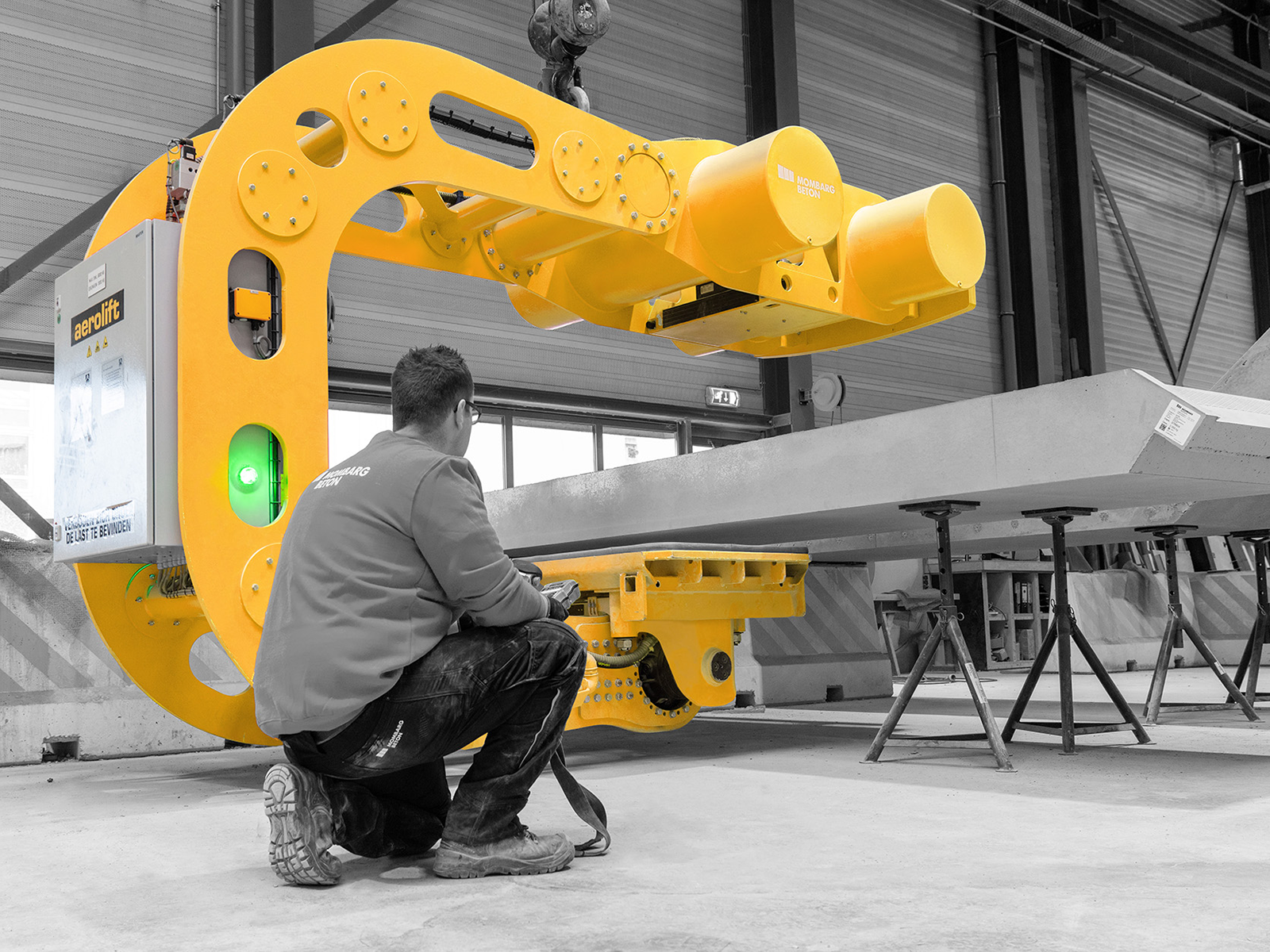
When precast concrete elements are cast in one orientation but need to be stored, transported, or installed in another, a vacuum tilter can combine demoulding, lifting, transport, and tilting in one operation. Our vacuum tilters are available with a 90° or 180° tilting function.
Integration with a host machine
Our vacuum lifters and tilters can be integrated with existing lifting equipment, such as an overhead, gantry or mobile crane. The configuration is matched to the host machine’s available connection or hook, power supply, controls, and lifting capacity. Depending on the handling process, the vacuum lifter and tilter can be operated by one person or integrated into a fully automated handling system.
Photos & videos of vacuum lifters & tilters for precast concrete





Advantages of vacuum lifting for precast concrete elements
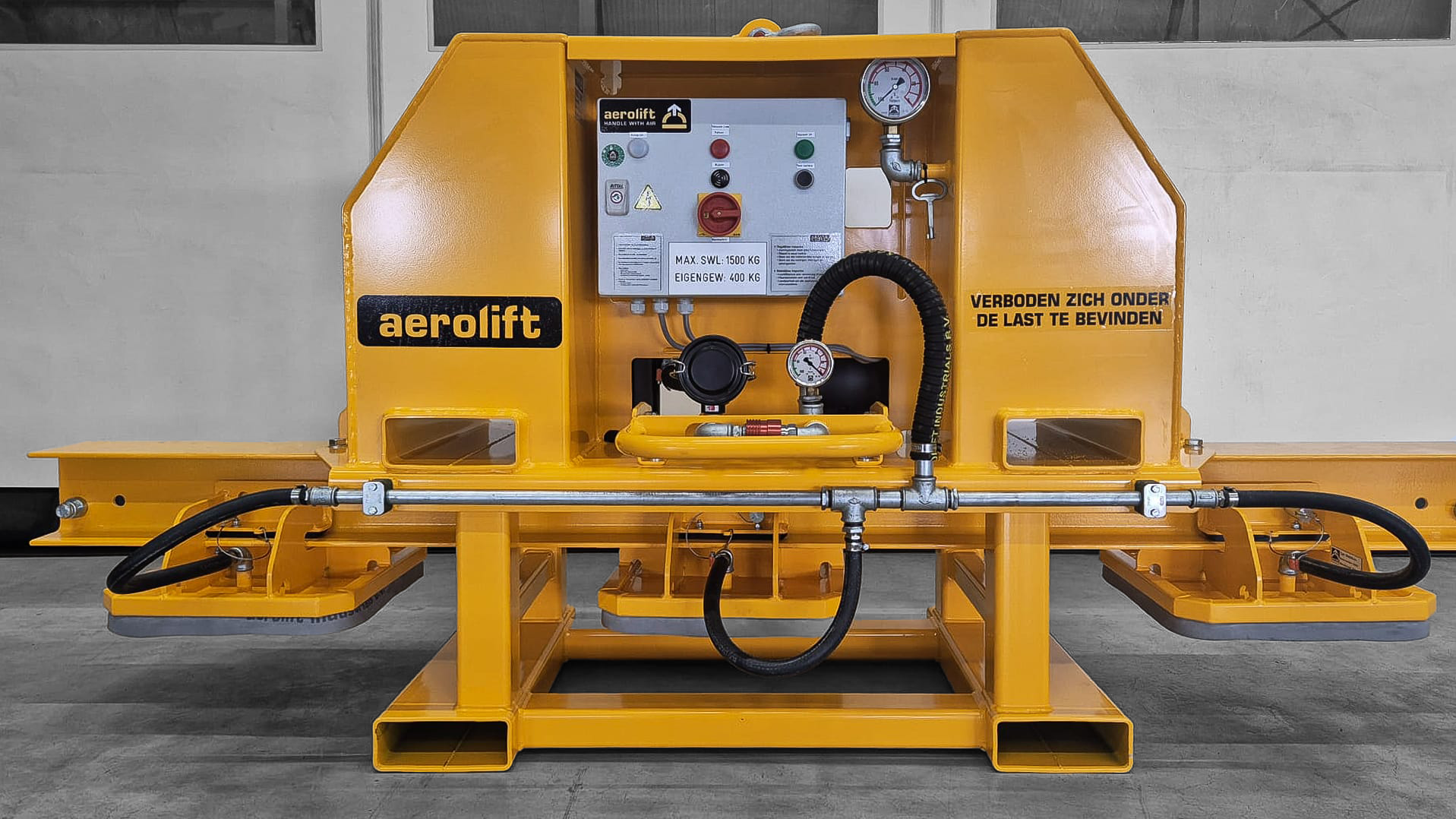
Precast concrete products are well suited to vacuum technology because their relatively smooth, airtight surfaces allow the suction pads to create a reliable seal. The load can be picked up directly from the top, without the need for slings, hooks or spacers around the product. Key benefits and advantages are:
- Reduced risk of product damage due to soft rubber
- Enhanced safety as handling can be controlled remotely
- Streamlined operations due to quick suction and release within seconds
- Simplified handling & lower equipment costs as no slings, hooks or spacers are necessary
- Earlier demoulding is possible due to the divided surface pressure of the suction pads
- Less chance of cracks due to equal load distribution
- Shorter cycle time by combining demoulding, transporting, and tilting in one movement
- Flexible handling of different sizes as suction pads can be configured or switched off to match the load
- Improved ergonomics due to reduced manual handling around the load
- Good return on investment through increased productivity and reduced operational expenses
Need expert advice on improving your material handling?
Various options for your needs
We engineer and manufacture each lifting solution around the specific handling situation. For common applications, a modular solution can often provide the required functionality with a shorter delivery time, while more specific requirements may call for a fully customised solution. For temporary projects or while waiting for a new machine, rental offers a practical way to get started right away.
Relevant products
-

U-series vacuum lifters
Aerolift U-series are modular vacuum lifters for smaller loads weighing 1-3 tons.Learn more -

S-series vacuum lifters
Aerolift S-series are modular vacuum lifters designed to handle loads weighing 1-30 tons.Learn more -
T-series vacuum tilters
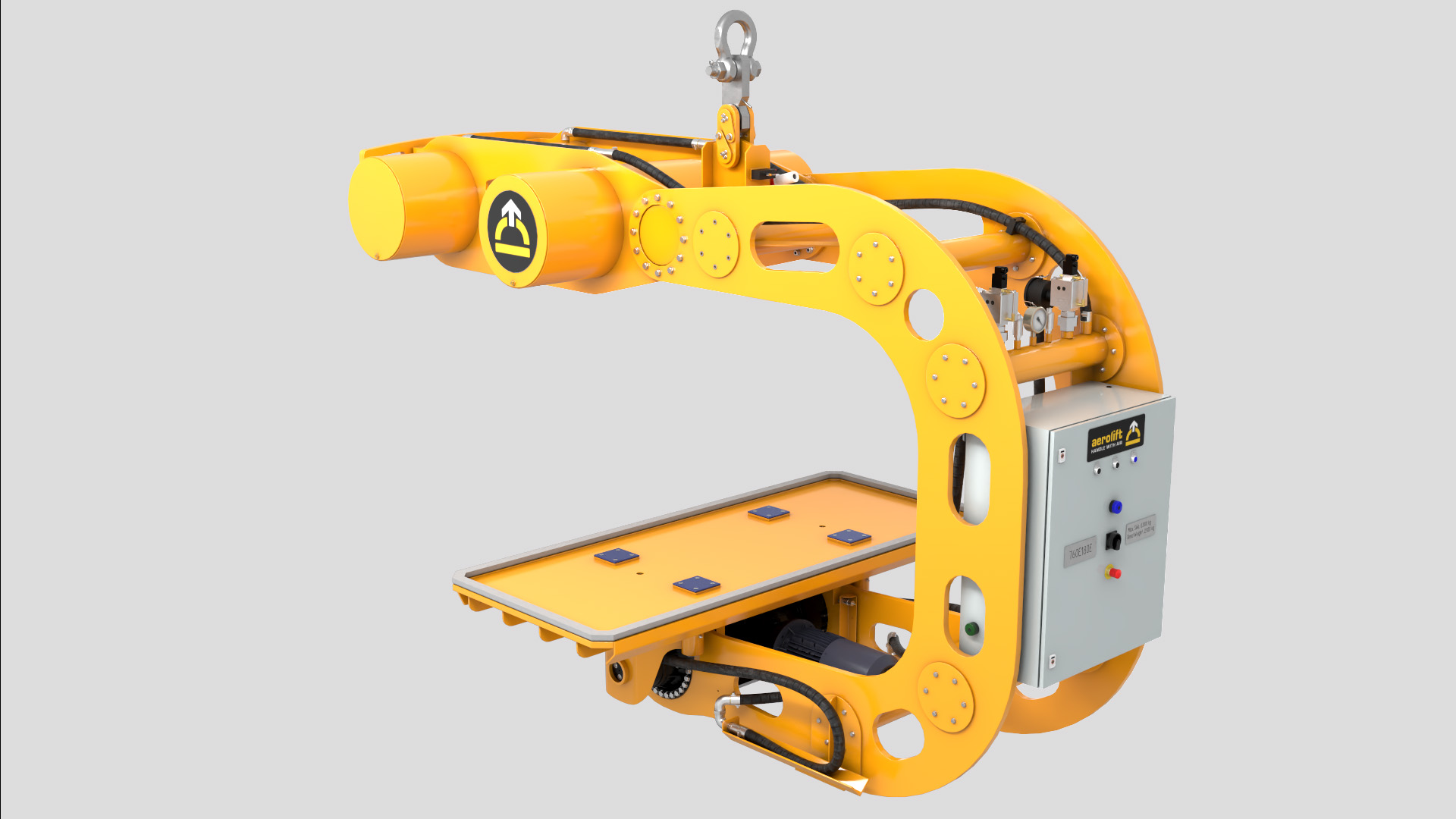
Aerolift T-series vacuum tilters are modular vacuum lifters with a tilting function.Learn more -
Mechanical lifting equipment
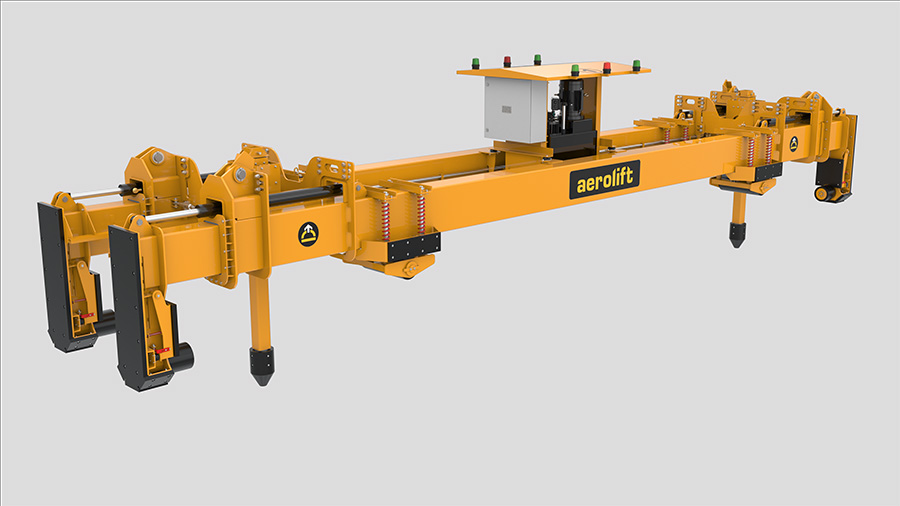
Aerolift mechanical solutions are for products that cannot be handled by vacuum technology.Learn more -

Custom solutions
Custom solutions are designed for unique needs that standard lifting attachments cannot meet.Learn more
Why choose Aerolift vacuum lifters and tilters?
For concrete handling, safety and efficiency have to work together in daily operation. We combine application experience with in-house engineering, manufacturing, and service to develop lifting solutions that are practical to operate and maintain over the long term.
Quality solutions that outperform
We have developed key components such as rubber seals, hoses, vacuum gauges, and valves specifically for our vacuum lifting systems. Combined with manufacturing within the Aerolift group, this gives us close control over quality, safety, and reliable operation.
Expertise & experience to think along
With more than 60 years of experience across different industries, we bring a broad perspective to each handling challenge. Combined with strong in-house engineering, this helps us look beyond the initial request and develop solutions that excel in performance and safety.
Easy maintenance and worldwide support
Our lifting devices are designed for straightforward maintenance, with key components positioned for easy access and daily checks in just a few minutes. Clear maintenance documentation, globally available components, and worldwide service support help minimise downtime and keep equipment in operation.
Projects & customer stories
-

- Concrete
Vacuum lifting of precast concrete piles
For Centrum Pile in the United Kingdom, we supplied three identical 16-ton vacuum lifters for handling precast concrete piles at an outdoor storage yard. The machines lift and transport square concrete piles ranging from 3 to 16 metres in length, covering the yard's full range of pile dimensions.
-

- Concrete
Two vacuum tilters for precast concrete handling
Mombarg Beton, a leading precast concrete supplier in the Netherlands, optimized its production process with two Aerolift vacuum tilters for demoulding, lifting, tilting, and moving of precast concrete elements. The tilters can operate independently or in tandem, allowing to handle a wide range of concrete elements with different dimensions and weights.
-

- Concrete
- Customer stories
Vacuum tilters – the solution for Mombarg Beton
Since we started using Aerolift vacuum tilters, the cycle time has greatly reduced. Demoulding is much faster and gentler because the force is distributed over the entire suction pad. As a result, there is...